Conservation Through Education
Why Australia is great
When you think of Australia, what comes to mind? The fact that it’s the world’s smallest continent or that it’s the largest country without land borders? Maybe you think about the more recognizable Kangaroo or Dingo?
If your philosophy is anything like us here at Reptile Encounters, your thoughts are probably more specific. We think about the unique wildlife that calls our vast continent home. We think about the reported 378 mammals that roam the land or the 828 bird species that soar overhead. We think about the 4000 types of fish that swim our waters and the 300 classes of lizards that climb our trees. We think of the 140 types of snakes that slither around and the 2 kinds of crocodiles that stalk the water banks. We even think of the 50 types of marine mammals that circle and sleep on our shores.
But most importantly, Reptile Encounters believes that through education and awareness, we can work together to help conservation efforts to maintain the wonderful uniqueness that is Australia. We are proud to be the most popular Mobile Zoo in Melbourne. It’s not only home to some of the most inimitable and amazing species, but also gives us one of the most diverse ecosystems in the world. However, this also puts us at great risk. Unfortunately some of the most interesting animals found here are in serious trouble and listed as “Critically Endangered.”
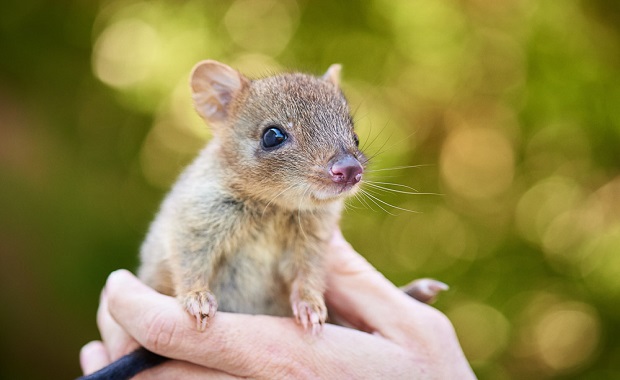
Woylie (Bettongia penicillata). This cute little guy is sadly listed as critically endangered.
How our philosophy can help
Reptile Encounters is stepping up to do our part to help educate people on the importance of conservation and sustainability to help preserve our diverse ecosystem. We believe that educating people on where and how animals live and interact with their environments can help instil respect and curiosity in maintaining this wonderful biodiversity. We also hope that teaching others about the dangers that threaten these unique animals will broaden minds and possibly open them up to wanting to preserve what makes Australia great.
As much as humans love their environment, they are a huge factor in the threat to the natural ecosystem these animals live in. Sadly, approximately 99.5% of the grasslands of Victoria have been lost or changed since Europeans arrived. Some of the main issues are soil erosion from overgrazing, industrial developments and urbanization, all of which threaten the habitat.
We offer hands on animal and reptile experiences specifically for educational purposes. One might not think right off hand about the scalier side of nature when it comes to endangered animals, yet they are just as important to our ecosystem as our furry ones. Interacting with these animals can resolve any fear a person might have about the lesser known species making them more apt to respecting and safeguarding them.
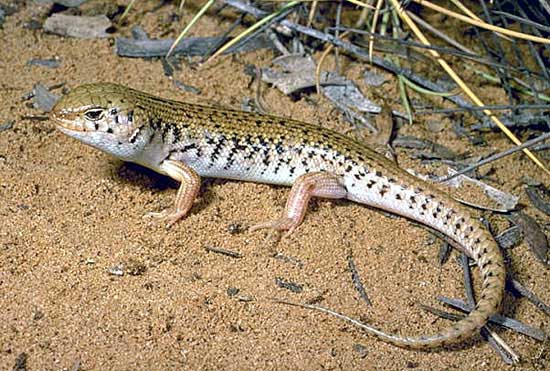
Nangur spiny skink (Nangura spinosa). One of many critically endangered skink species.
Photo credit: CSIRO
Fall in love with what makes Australia great and get involved in helping to maintain it.



Reptile Encounters would like to acknowledge the Wurundjeri people who are the Traditional Custodians of this Land.
We would also like to pay respect to the Elders both past and present of the Kulin Nation and extend that respect to other Indigenous Australians.